
Backwater Valve Installation in Manotick: what to know before the next step
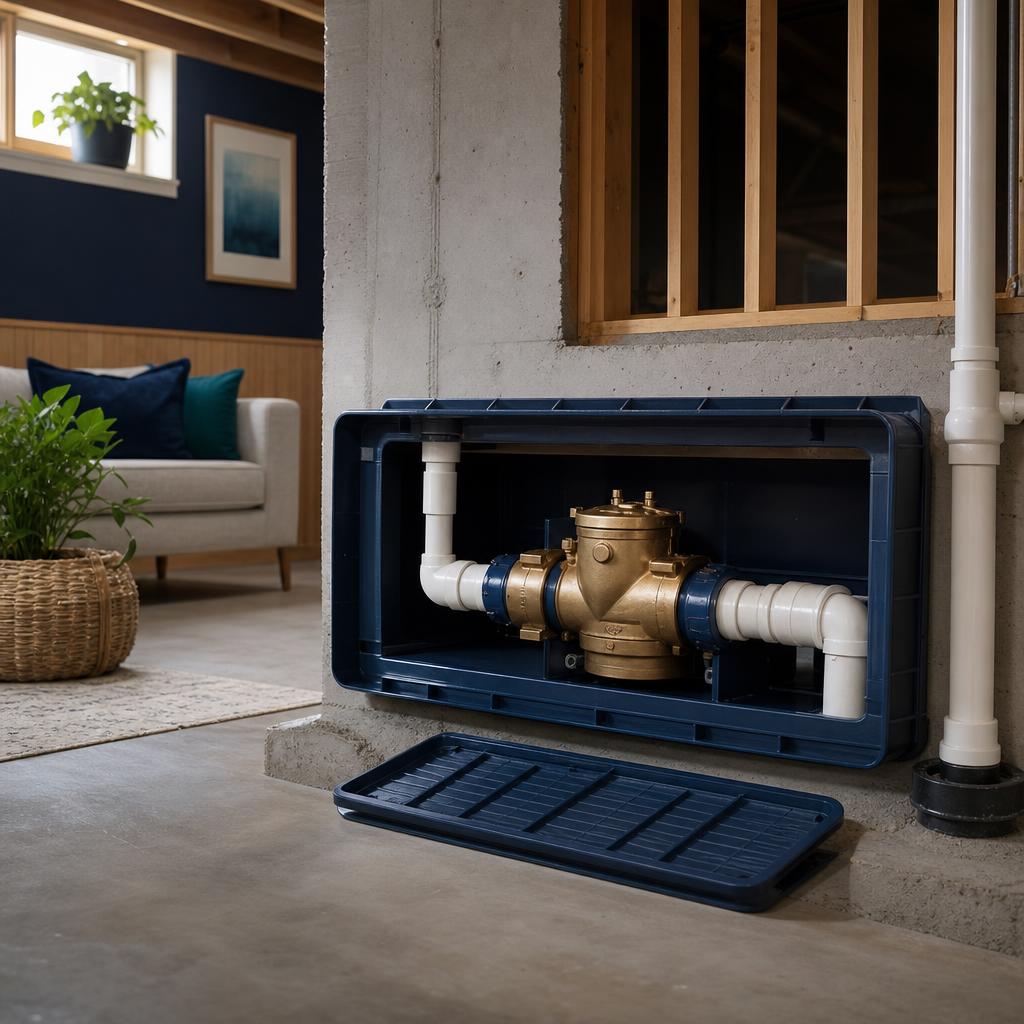
Illustrative AI-generated image, not a photograph of local work or a provider.
Backwater valve installation in Manotick is intended to reduce one route by which wastewater can move back toward a home. It is not a guarantee against basement flooding, and it is not interchangeable with a sump pump. This informational guide explains how a valve works, what an existing drainage layout means for planning, and how homeowners can think about access and maintenance. Actual suitability depends on the property and a qualified assessment. ManotickPlumber.com is an information and service-request resource, not a claim that a provider is currently configured or available.
What a backwater valve does
A backwater valve contains a flap or gate designed to permit normal drainage away from the building while resisting reverse flow toward connected fixtures. Its value depends on location, orientation, access, and the condition of the connected sanitary drainage. When the flap closes, fixtures upstream of the valve may not drain normally until the downstream pressure condition resolves. That trade-off is why a valve should be understood as part of a system, not a device to install without considering usage.
The valve cannot stop groundwater entering through foundation cracks, a failed sump pump, a leaking wall, or an overwhelmed window well. It also cannot correct every drain or vent problem. Start with backwater valve service information, then map the lower-level fixtures and floor drains that could be affected. Ask which pathways are protected and which remain outside the valve’s scope.
Reviewing the existing drainage layout
Planning begins with the building’s sanitary line, cleanouts, floor elevation, fixture connections, and access. The valve may need to be placed where the intended branch or building sewer can be protected while still allowing inspection. Older homes, additions, finished basements, and unusual routing can make this less straightforward. Records may help, but they should not be treated as a substitute for exposing and examining the actual pipe.
A homeowner can prepare by listing basement toilets, sinks, laundry fixtures, floor drains, and any renovations that changed their location. Note odours, slow drains, previous backup levels, and where cleanouts are visible. Basement plumbing guidance is useful for making that inventory. Do not open a contaminated cleanout or handle sewage without appropriate protection; uncertainty about the line is a reason for professional assessment, not a reason to guess.
Installation access and disruption
Many installations require access to buried drainage beneath a basement floor or another serviceable location. Saw cutting, concrete removal, excavation, pipe work, testing, and patching can create dust and noise. Finished flooring, cabinetry, radiant systems, and stored items influence both access and protection. Before approving work, ask where the opening will be, how removed material will be contained, and whether surface restoration is included or belongs to another trade.
An accessible cover is essential after installation. Hiding a valve beneath permanent cabinetry or a sealed floor makes routine inspection harder and can turn a sensible protection measure into an ignored component. Photograph the location, mark it on a household plan, and keep the service information nearby. If a basement is being renovated, consult renovation plumbing planning before walls or floors are closed.
Valve selection and orientation
Different valve designs suit different pipe sizes, flow patterns, access constraints, and installation positions. A valve must be oriented according to its design and installed so the flap can move without binding. Debris, mortar, wipes, grease, or sediment can prevent closure or prevent reopening. A larger-looking product is not necessarily a better choice if it cannot be maintained or does not fit the existing line.
Ask the installer to explain normal drainage, the protected area, the service opening, and how the valve responds during a reverse-flow event. Clarify whether a cleanout or other access remains usable. The relevant question is not simply “Do I have a backwater valve?” but “Can I identify, inspect, and maintain the valve that protects the drainage path I care about?” Plumbing repair guidance can help frame questions about older or damaged components.
Maintenance and homeowner checks
A valve is a mechanical component in a dirty water environment. Maintenance may involve removing the cover when safe, inspecting the flap, clearing debris, checking seals, and confirming that the mechanism moves as designed. Follow the manufacturer’s instructions and any advice provided for the installed model. If sewage is present, stop and use appropriate professional assistance. Do not force a stuck flap with improvised tools or pour chemicals into the line.
Keep the access area clear and schedule a visual review as part of broader basement maintenance. Slow drainage, gurgling, odours, or a valve that closes unexpectedly should be investigated. Never assume that a recent installation is self-maintaining forever. Pair the review with drain cleaning information when recurring blockage is present, because a dirty line may be contributing to the problem rather than proving that the valve is defective.
Using fixtures when the valve is closed
When downstream sewer conditions cause the valve to close, water sent into protected fixtures has nowhere to leave normally. Continuing to flush toilets, run laundry, or empty a bathtub can fill the home’s side of the system. Everyone in the household should know the access location, the visible signs of closure, and the instruction to limit water use until the condition is understood. This is a practical behaviour change, not merely an equipment feature.
A closed valve can also reveal that household communications are part of flood planning. Put a simple notice in a utility area, explain it to guests, and keep a flashlight available. A valve does not authorize entering contaminated water or opening a pressurized or unsafe cleanout. For other lower-level risks, compare basement flood protection, which addresses sump performance, floor drains, and sewer backup as separate concerns.
Limits and complementary measures
Backwater protection is one layer. It does not repair foundation drainage, guarantee a dry basement, prevent roof or surface water entry, or replace a functioning sump and discharge. Window wells, grading, downspouts, floor drains, plumbing fixtures, and the condition of the sewer connection may each create a different risk. Prioritize based on actual pathways and the consequences for your household rather than buying a single product because flooding is a general worry.
An alarm, cleanout access, pump backup, and household response plan may complement the valve, but each has its own maintenance. Water damage insurance questions belong with your insurer, not a plumbing information page. Water damage prevention guidance can support a checklist while you confirm what your property and policy require. No page can promise that a valve will prevent every loss.
Requesting an installation assessment
Include the home’s age if known, basement finish, visible cleanouts, fixture list, previous backup evidence, and photos of safe, dry access points. Ask whether excavation is expected, what portion of the drainage is protected, how the valve will be accessed, and who handles concrete or flooring restoration. Request a clear scope that distinguishes assessment, installation, testing, and future maintenance. Do not rely on a generic product description to answer property-specific questions.
This site does not publish universal prices, claim an operating provider, imply a licence or guarantee, promise emergency dispatch, or describe actual local projects. The estimate request form is a non-emergency inquiry route. Confirm provider identity, qualifications, scope, insurance, scheduling, permits or approvals where applicable, and warranty terms directly. If sewage is actively entering the home, protect people first and contact the appropriate emergency resource.
Questions about backwater valve installation in manotick
Will a backwater valve stop every basement flood?
No. It addresses reverse flow through a connected drainage route. Groundwater, surface water, foundation leaks, sump failure, and other plumbing pathways require different measures.
Where is a backwater valve usually installed?
The suitable location depends on the building sewer or branch layout, protected fixtures, pipe condition, and access. A professional must assess the actual drainage rather than choosing a location from a generic diagram.
Can I cover the valve with a finished floor?
Access should remain available for inspection and maintenance. Discuss the cover and finished-floor treatment before work so the valve is not permanently hidden or made difficult to service.
Can I use the basement toilet when the valve is closed?
Avoid adding water while the valve is closed or drainage is impaired. Follow the household plan and obtain guidance; continued use can cause wastewater to accumulate upstream.
Does a backwater valve need maintenance?
Yes. Debris and mechanical wear can affect movement. Follow the installed model’s instructions and obtain professional help if the valve is dirty, stuck, damaged, or exposed to sewage.
Is a backwater valve the same as a sump pump?
No. A sump pump moves groundwater collected around the foundation, while a backwater valve helps resist reverse sanitary drainage flow. They address different water pathways.