
Backwater valves: what to know before the next step
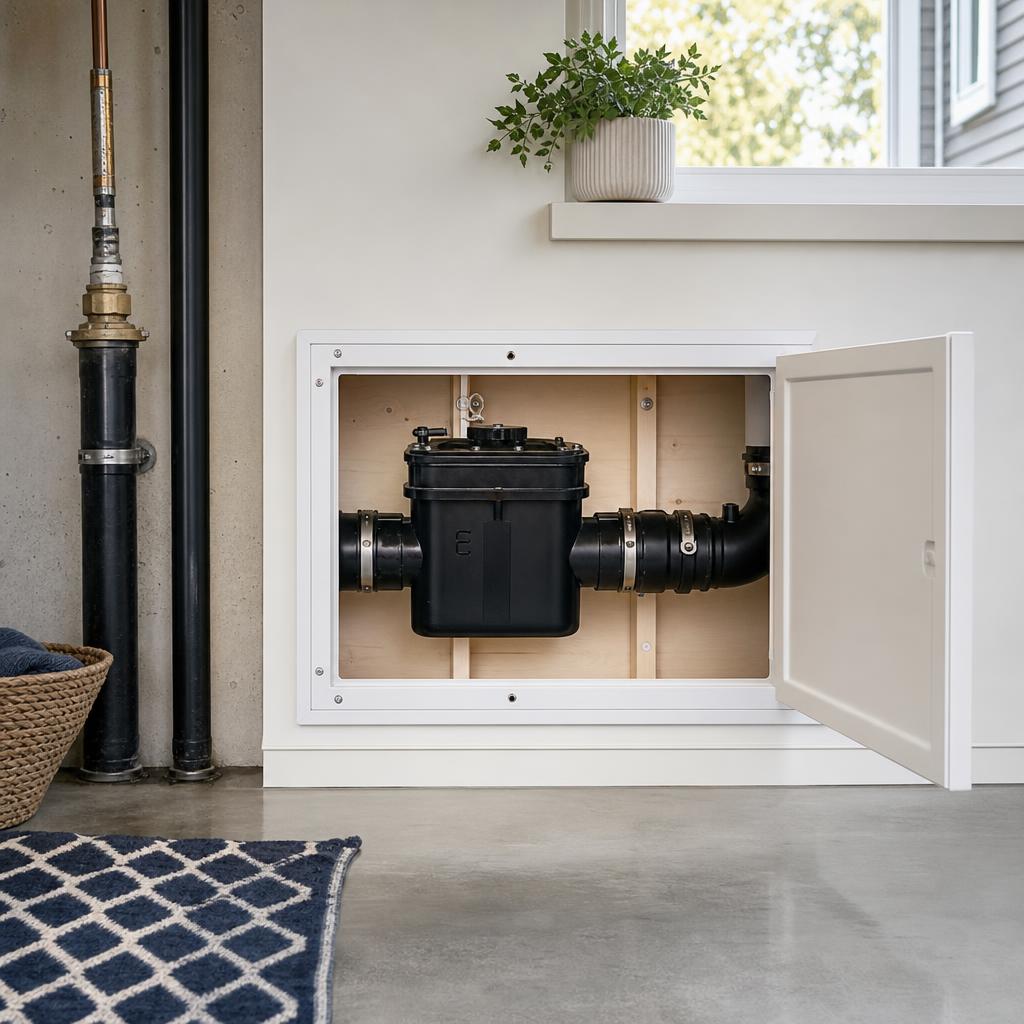
Illustrative AI-generated image, not a photograph of local work or a provider.
A backwater valve is intended to limit reverse flow through a connected sanitary or combined drainage line when downstream conditions push wastewater back toward a home. It is a plumbing component, not a guarantee against every kind of basement flooding. This page explains installation planning, access, inspection, and homeowner decisions in practical terms for Manotick and south Ottawa. It is an information and service-request resource, not a statement that a particular provider is operating, licensed, available, dispatched, or responsible for work. Start with basement flood protection when several risks overlap.
What reverse flow means
Drainage normally carries wastewater away from fixtures. During a downstream restriction or surcharge, pressure and gravity can reverse that direction, allowing water to travel toward lower fixtures and floor drains. A backwater valve uses a flap or gate that permits normal outward flow while closing against reverse flow. The exact behaviour depends on the valve design, installation orientation, debris condition, and the part of the drainage system it serves. Understanding that boundary prevents unrealistic expectations.
A valve does not stop groundwater through foundation walls, rain entering window wells, a failed sump discharge, or a leak in a supply pipe. It may also not protect fixtures that are connected on the upstream or downstream side in a way the homeowner has not identified. Sketching basement fixtures, floor drains, cleanouts, and the main building drain is useful before discussing options. Pair this page with sump pump information so two different water pathways are not treated as one problem.
Where an assessment begins
A sensible assessment identifies the building drain, accessible cleanouts, floor elevation, nearby fixtures, and the route to the municipal connection or private treatment system. Existing drawings may be incomplete, especially after renovations. A camera inspection or access through a cleanout can sometimes clarify conditions, but the suitable method depends on the property and the question being asked. Do not open a buried cleanout or excavate concrete without understanding what is below and how contaminated water will be handled.
The proposed valve location should permit inspection and cleaning. A component hidden under a fixed cabinet or finished floor may provide theoretical protection but be difficult to maintain. Ask which fixtures the valve serves, where access will remain, and what happens if debris prevents the flap from closing. A provider should explain observed facts separately from assumptions. For general pipe symptoms, review drain cleaning guidance rather than interpreting slow drainage as proof that a backwater valve is required.
Installation choices and disruption
Installing a valve can involve exposing a building drain below the slab, creating a service opening, cutting and reconnecting pipe, or working in an existing mechanical area. The amount of disruption depends on depth, material, access, obstructions, and the condition of the line. A clean installation is not simply a matter of putting a flap into the nearest pipe. Pipe slope, flow direction, joint support, and the access cover all influence long-term performance.
Before agreeing to work, ask for a plain-language scope: where the valve goes, what surfaces need opening, how they will be protected, how the line will be tested, and what restoration is excluded. Plumbing work and concrete, flooring, or finishing work may be separate scopes. This site cannot promise a price, permit outcome, schedule, warranty, or provider. The renovation plumbing guide explains why early coordination matters when access is part of a basement improvement.
Maintenance is part of protection
A valve that is never inspected can become less useful through grease, sediment, wipes, roots, corrosion, or a flap that sticks in place. The maintenance interval should follow the component instructions and the conditions in the line. Keep the access cover reachable and do not stack storage on top of it. If the cover smells strongly of sewage, is damaged, or cannot be opened safely, stop and obtain appropriate help instead of forcing it.
A homeowner can record the date of inspection, visible debris, flap movement as described by the manufacturer, and any history of backup or slow drainage. Never put hands into contaminated standing water and never use a chemical drain product to “clean” a valve. Maintenance is also a chance to confirm that a renovation has not added fixtures in a way that changes the protected drainage arrangement. Plumbing safety guidance provides broader boundaries for shutoffs, sanitation, and electrical hazards.
Symptoms that deserve investigation
Gurgling drains, sewage odour, water at a floor drain, repeated backups, or a cleanout that overflows can indicate a drainage issue, but none alone identifies the valve as the cause. A stuck closed flap can restrict normal discharge; a missing or poorly supported cleanout cap can leak; a downstream blockage can create pressure even when the valve is sound. Record which fixture is affected and whether other fixtures change at the same time. Avoid flushing toilets or running fixtures if water is rising.
If sewage has entered a basement, keep people and pets away, avoid contact with electrical equipment, and arrange appropriate emergency, sanitation, and restoration assistance. The form on this website is not emergency dispatch and should not be used as a substitute for immediate help. For a non-urgent concern, an assessment can distinguish line blockage, valve maintenance, groundwater, and fixture problems. A plumbing repair request is the relevant starting point when the immediate symptom is a leak or malfunction rather than flood planning.
Backwater protection and household habits
A valve works best when the drainage system is treated thoughtfully. Do not flush wipes, grease, solvents, or objects that can settle at the flap. Make sure everyone in the household knows where the access point is and what an alarm or unusual gurgle means. Keep a flashlight and gloves available for observation, but not for unsafe contact with sewage. During severe weather or a known drainage concern, reducing non-essential water use may limit loading while you seek advice; it is not a cure.
Basement fixtures can complicate planning. A toilet, shower, laundry sink, or floor drain may be at a level where reverse flow has consequences, while an upper-storey fixture may behave differently. Do not cap or remove a drain to hide symptoms. Consider the valve alongside a maintained sump, a sound discharge route, grading, and sensible storage. The flood protection planning checklist can help organize those layers without suggesting that one product eliminates all risk.
Questions about rules and records
Drainage work can intersect with building access, excavation, restoration, and local requirements. Requirements depend on the work, property, authority, and current rules, so this page does not make a universal permit or compliance claim. Ask the provider what approvals, inspections, or coordination they believe apply and verify that advice with the relevant authority. Retain diagrams, invoices, product information, photographs, and maintenance notes for future owners and future troubleshooting.
The most useful records state what was actually observed: line size, valve model, location, protected fixtures, test method, and unresolved limitations. Avoid describing a home as “flood-proof” after installation. A valve is one risk-control measure with failure modes and maintenance needs. If a quote is being considered, estimate factors for plumbing work may help you ask about access, excavation, restoration, testing, and materials without assuming a standard price.
Choosing an informed next step
For a home with no history of backup, planning can begin with a map of low fixtures, the building drain, existing access, and the condition of the sump system. For a home with repeated events, gather dates, weather, affected fixtures, photographs, and any reports of municipal or private line trouble. A provider can then assess whether a valve, line repair, cleaning, grading change, sump improvement, or a combination addresses the observed pathway. Do not authorize excavation solely because a search result makes a general recommendation.
Use the backwater valve service page to submit a non-emergency request if you want to discuss the topic, and confirm who would respond before sharing sensitive property details. ManotickPlumber.com is designed to provide information and facilitate inquiries; it does not itself perform work or guarantee provider identity, licensing, insurance, availability, response time, cost, or outcome. Those facts should be confirmed directly before any work begins.
Questions about backwater valves
Does a backwater valve prevent every basement flood?
No. It addresses reverse flow through the drainage path it serves. Groundwater, stormwater, foundation leaks, sump failures, burst pipes, and an unprotected fixture can still cause flooding. Think in layers and identify the actual water route before selecting equipment.
How often should a backwater valve be checked?
Follow the product and provider guidance, with additional attention after a backup, renovation, or unusual drainage event. Keep access clear and record what was inspected. Do not handle sewage or force a stuck cover; arrange suitable help when sanitation or access is unsafe.
Can I install one in any drain?
Not responsibly without understanding the drainage layout, flow direction, pipe condition, access, and which fixtures need protection. An incorrectly placed or inaccessible valve may restrict normal drainage or leave key fixtures outside its protected section. An assessment is more reliable than choosing a location by convenience.
Why is my basement drain gurgling?
Possible causes include a downstream restriction, air movement, a valve problem, venting, or a fixture-specific issue. Gurgling is a warning, not a diagnosis. Reduce non-essential water use if water is rising, keep away from contamination, and seek appropriate plumbing advice.
Is a backwater valve the same as a sump pump?
No. A sump pump lifts collected groundwater or drainage water from a basin, while a backwater valve limits reverse movement in a connected drain. Many homes may need to consider both, but each has different installation, testing, and failure concerns.