
Sump pumps: what to know before the next step
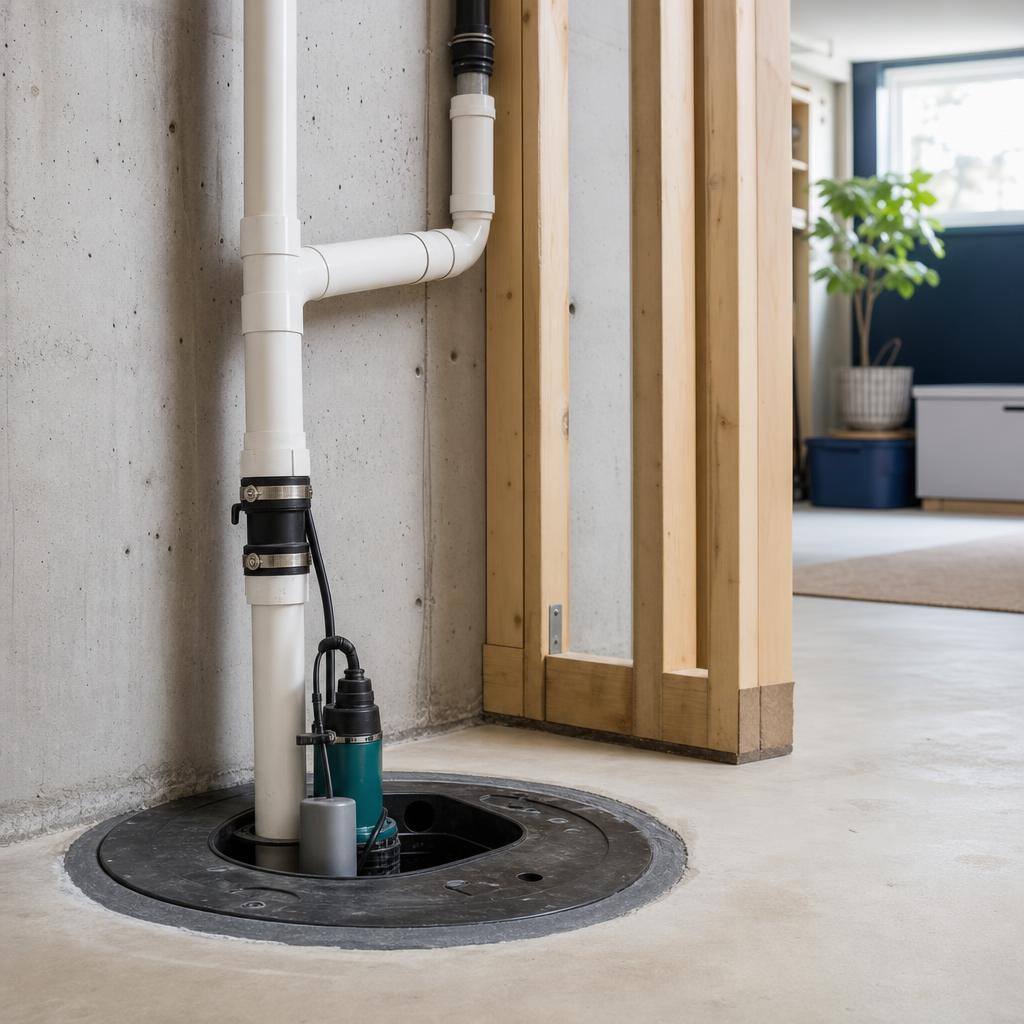
Illustrative AI-generated image, not a photograph of local work or a provider.
A sump pump is a quiet piece of basement equipment until groundwater, snowmelt, or a hard rain gives it a real job. This guide explains how the pit, pump, discharge line, check valve, power supply, and backup plan work together. It is educational information for Manotick and south Ottawa homeowners, not a promise that a provider is operating, available, licensed, or dispatched through this site. For related context, compare this guide with basement flood protection and plumbing repairs, then use the request form only for a non-emergency service inquiry.
What a sump pump actually protects
A sump system collects water that reaches a low point below or beside the basement floor and lifts it away from the foundation. The pit is not intended to make every basement waterproof, and the pump cannot correct every grading, drainage, or foundation problem. Its useful role is narrower and important: when water gathers at the pit, a working pump moves it through a discharge route before it can spread across the slab. The result depends on the whole system, not the motor alone.
Walk around the lower level and note whether the pump serves an unfinished area, finished flooring, a window well, or several drainage paths. A pump that runs frequently may be doing valuable work, or it may be signalling excess inflow, a blocked discharge, or a poorly sealed lid. Do not assume that a dry floor proves the equipment is unnecessary. Dryness may mean the system is working, the season is quiet, or water is taking another path. A written home plumbing checklist can help you record observations without taking equipment apart.
Know the parts before choosing service
Most systems include a basin, a submersible pump, a float or electronic sensor, a discharge pipe, and a check valve. The float tells the pump when water has reached a set level; the pump pushes water upward; the check valve helps stop the column of water from falling back into the basin after the motor stops. Some installations also include a sealed or covered pit, an alarm, a second pump, or a battery and inverter arrangement. Each addition creates another connection that deserves inspection.
The label on a pump can provide model and capacity information, but capacity in a catalogue is not the same as performance in a particular home. Vertical lift, pipe diameter, bends, valve condition, and discharge distance all affect flow. A replacement selected only by horsepower may be poorly matched to the existing line. If your question is really about an ageing motor, a noisy unit, or water around a connection, the plumbing repair request route is more relevant than ordering a pump from a photograph.
Seasonal inspection you can do safely
Before a wet season, look into the basin without reaching into standing water or removing electrical covers. Confirm that the pump is upright, the float can move freely, and the discharge pipe has not shifted, cracked, or been crushed by stored items. If the design has a test plug or a clearly accessible safe test method, follow the manufacturer’s instructions and observe whether water leaves the home as intended. Keep children away from an open pit and never place hands near a powered pump.
Outside, find where the discharge ends and check that it is not buried under snow, blocked by leaves, or directed toward the foundation. Do not redirect water onto a neighbour’s property, a walkway, or a location where it can refreeze. A discharge line should not be casually capped because it is inconvenient. Photograph the route and note unusual cycling, vibration, odour, or alarm activity. These details make a later assessment more useful and complement guidance about water and drainage concerns.
Recognising failure before flooding
A pump that runs constantly, starts and stops every few seconds, hums without moving water, or trips its electrical protection deserves attention. So does a system that has become louder, vibrates against the basin, or leaves the water level higher than usual. A stuck float can prevent starting, while a blocked impeller or discharge can make a running motor ineffective. Repeatedly resetting a breaker is not a repair. Stop and seek qualified help if electrical components are wet, hot, damaged, or inaccessible.
If water is already entering, protect people first: keep away from wet electrical areas, move valuables only if you can do so without entering unsafe water, and contact an appropriate emergency resource when there is an immediate threat to life or property. This website’s form is a service-request demonstration, not emergency dispatch. Never use an extension cord through wet areas or improvise a connection. For non-urgent planning, the water heater and plumbing safety notes offer similar shutoff and electrical-boundary reminders.
Replacement and installation decisions
Replacement planning starts with the basin and discharge, not a shopping list. Measure or document the pump’s normal water level, outlet size, approximate lift, and the space available for a backup unit. Ask whether the current check valve leaks, whether the lid is usable, and whether the pipe exits through a suitable route. A new pump can fail to solve the problem if the old discharge is restricted or the float cannot move. An assessment should identify the failure mode and explain what work is proposed before anything is changed.
Installation also involves noise, access, serviceability, and the consequences of a power outage. A primary pump and a backup pump may share a basin but should not be treated as automatically redundant; both need compatible plumbing, power, and controls. A battery backup has finite runtime and requires maintenance. An elevated alarm can provide valuable warning but cannot pump water itself. Read water heater and home-system planning only for the broader principle: equipment should be selected around the home’s actual demand, access, and safe operation.
Power outages and backup layers
A power failure is a common reason homeowners think about backup, but it is not the only one. A blocked discharge, failed float, seized motor, or overwhelmed inflow can defeat a primary system while electricity is still present. Start by identifying which risk matters in your basement. An alarm may be the most useful first improvement for a homeowner who is often away; a second pump may suit a high-inflow basin; battery capacity may matter where outages coincide with storms. The right combination depends on observation rather than fear.
Test backup equipment according to its instructions and keep batteries within their recommended service life. Learn whether the backup starts automatically, whether it has a separate discharge path, and what alarm means low battery versus high water. Do not connect generators indoors or in a garage, and do not place combustion equipment near basement openings. A backup plan should include who will hear an alarm and what safe shutoff or call sequence follows. The home service request can record these questions for a future conversation, but it does not confirm availability.
Basement finishes and water evidence
Finished basements conceal the very evidence that helps diagnose water. Look for staining at baseboards, lifted flooring, damp odours, efflorescence on masonry, swollen trim, and marks around the pit or floor drain. These clues do not identify a cause by themselves: condensation, plumbing leakage, surface runoff, groundwater, and sewer backup can look similar. Keep a dated log of rain, thaw, pump cycles, and where moisture appeared. Do not close walls or replace flooring until the source and drying needs are understood.
Protecting a basement means considering every route, not placing all confidence in one pump. Floor drains need to remain accessible; lower fixtures need sound traps and connections; stored goods should be raised where practical. A backwater valve may address a different risk from groundwater, and it requires its own access and maintenance. Read backwater valve guidance alongside this page so sewer-related and foundation-related concerns are not confused. If mould, contaminated water, or structural damage is present, use specialists suited to that hazard.
Planning a useful assessment
Before requesting non-emergency service, gather the pump brand and age if known, photographs of the pit and discharge, the date of the last test, and a description of what changed. Mention whether water is clear or dirty, whether the motor runs, whether an alarm sounds, and whether the issue follows rain or a power outage. Do not remove a sealed lid, cut pipe, or disassemble a motor merely to collect information. A clear description helps distinguish maintenance, repair, replacement, and a broader drainage investigation.
A responsible conversation should cover scope, access, materials, disposal, testing, and what remains uncertain. Ask which observations support the recommendation and which options are alternatives. This site provides general information and a way to request contact; it does not represent that a specific provider, licence, price, warranty, response time, or result is assured. Review how estimates work for factors that influence a quote, and confirm credentials, insurance, permits, and local requirements directly with the provider before authorizing work.
Questions about sump pumps
How often should I test a sump pump?
Check it visually before wet seasons and after major work around the basin or discharge. Use only the manufacturer’s safe test method, observe the full discharge route, and investigate unusual noise, cycling, or a rising water level rather than repeatedly forcing a test.
Is a battery backup enough protection?
It can add resilience during an outage, but runtime, battery condition, inflow, discharge layout, and alarm response all matter. A backup does not correct a blocked pipe or failed float. Ask for the limits of the proposed system and test it on the schedule recommended for its components.
Why does my pump run but the basement still gets wet?
The discharge may be blocked, the check valve may leak, the pump may be undersized for the lift, or water may be entering elsewhere. Moisture can also come from plumbing leaks, condensation, or sewer conditions. Record timing and locations and seek an assessment rather than adding a larger motor blindly.
Can I replace a sump pump myself?
Some homeowners can perform limited maintenance, but electrical exposure, lifting, water contamination, and discharge changes create real hazards. Do not work around wet power or defeat safety devices. If the pump is hardwired, the basin is confined, or the cause is unclear, use a suitably qualified professional.
Does a sump pump make a basement waterproof?
No. It manages collected water at the pit. Grading, foundation drainage, cracks, plumbing, condensation, and sewer backup may require different solutions. Treat the pump as one layer in a drainage plan and investigate recurring moisture instead of assuming the motor is the entire answer.